Monday, April 2, 2018

Think Q-U-I-C-K-L-Y


Pretty pleased with how this one turned out, to be honest.  The main idea is nothing earth-shattering -- spell-out-a-letter puzzles have been before; one was published in the NYT about a year ago by Zhouqin Burnikel (who else?) -- but I feel like I distinguished this one in a few ways.  First, I made the revealer an imperative clue, which I thought was a nice touch; second, the letters in QUICKLY are "fun" (or at least Scrabbly -- the tile values in QUICKLY add to 25 points); third, there are a lot of theme answers crammed into the grid -- even though most of them are short, fitting eight into a puzzle is a tall order.  So, if you judge a puzzle strictly by number of theme answers (which, of course, you should) then this one is terrific!

Because of the high theme-density, I figured there wouldn't be much room for "bonus" fill (interesting non-theme entries), so once I got the themers in place, I focused on making the grid as clean as possible, even if it meant forgoing "zippy" entries in certain places.  Was I successful in this endeavor?  I think I so; others will surely disagree.  One thing not in my favor is that I think this puzzle is misplaced on a Tuesday -- I think it should be a Wednesday puzzle.  Some of the names are more suited for a puzzle later in the week.  But then again, I'm biased because I've been shooting for a Wednesday puzzle for a long time (to hit for "the cycle"), and it remains elusive -- I've had a few Tuesdays people think are too hard and a few Thursdays people think are too easy, but no Wednesday, as yet.

I suspect some solvers are going to grouse about the proper names, not all of which are super well-known (e.g., LESAGE, YOST, ABOU).  I wouldn't mind them if I were solving this puzzle -- I like a lot of trivia in my puzzles -- but I know from prior feedback that many (most?) solvers feel differently.  I go back and forth between strictly regulating the amount of trivia I inject into my puzzles and just owning it.  At any given moment, I'm probably somewhere in the middle.  My overriding philosophy now is that I'm not going to go out of my way to add proper nouns (like I used to), but I'm going to favor them over fill I personally dislike, such as partials, random Roman numerals, and uncommon variants or abbreviations.

As an example, consider the pattern Y??T that the theme answers imposed at 44-Down.  There are three options -- YEST, YOST, and YURT.  YURT is the best entry of the three, in my opinion, because it's a (relatively) common English word.  However, YURT forces the A?R pattern at 51-Across (ABOU is literally the only thing I know of that works for ?B?U), and it forces an initial U at 49-Across, both of which are awkward given the other constraints.  Getting YURT in would have required worse trade-offs, like, say, the ugly abbreviation ABR (used once in the NYT almost 20 years ago: "Like pocket dicts.").  So, ruling out YURT, it comes down to YEST or YOST -- which is better?  In my opinion, it's YOST and it's not particularly close.  YEST is an abbreviation I cannot find anywhere.  In the dictionary it tells me it's an archaic variant of YEAST, and when I Google it, it returns mostly random gibberish.  YOST, on the other hand, might not be well-known to non-baseball fans, but he did lead the Royals to a World Series victory less than three years ago.  And when I Google "YOST," I see a link to a real thing, an actual person.  That's good.  (By the way, there is another baseball YOST -- Eddie Yost -- who might have been the greatest walker in MLB history.)


Anyway, I'm talking so much about proper nouns, and the issue solvers have with this puzzle is probably going to be something else completely.  That seems to be how it goes.  It's always something I don't even think of.  This happened to the nth degree at ACPT the week before last, where my puzzle caused much ado because some solvers interpreted it in a way I never anticipated.  You can read my take on the entire weekend here.  I've already been told that I underplay the chaos and frustration my puzzle caused, but that's mainly because I got tired of writing (and the post was already quite long).  I'm well aware, and I even had a whole other section of the post worked out in my head about hearing solvers plead their cases to the judges, but I just ran out of steam.  So it goes.

Anyway, I might hop back on and post a few more thoughts after perusing the blogosphere.  If not, until next time...

Wednesday, March 28, 2018

Dear Diary: ACPT Edition (No Spoilers)

This post, I suspect, is going to quickly turn into a self-congratulatory paean to the crossword community, but so be it.  It's on my first ACPT experience, and my first ACPT experience was overwhelmingly positive, so that's going to be the tone the post.  Anything less than "Wow... that was awesome!" would be disingenuous.

Also, this post is kinda long -- it's a kinda long self-congratulatory paean.

But I shall begin with one part of tournament that stressed me out a bit: I didn't know where to go or what to do once I got there.  Since one of my puzzles was to appear in the tournament, I couldn't attend as a solver, so I (happily) agreed to be a tournament official, but I didn't really know what that meant.  Some new crossword (and trivia) acquaintances, Brian Cross and Michael Berman, were gracious enough to let me ride up with them (from the DC-area), and at one point they asked me what time I needed to be there, and I was like, "Uhhh... five-o-clock?... maybe?"  I was told in an email that there would be a dinner for officials at that time, but I was never given a place.  When I inquired further, I was told it was "in flux," and I would get an announcement.  I did not get an announcement.  I figured that once I got there everything would make sense and it would all be easy to figure out (which it was), but even though I could figure that, I couldn't feel that.  I'm not laid back when it comes to making travel plans -- not at all.  I'm fine once everything is "set," but until then I anxiously obsess over every accommodation and every decision.  So, it bothered me to not have a definite time and place to meet.  (By the way, a good remedy for this condition is to marry somebody who's the exact opposite, even if it does mean your spouse will likely laugh at you for it.  Initially, I was going to take the train up, and my wife was getting a kick out of how long I deliberated over three tickets that were virtually identical -- "Just buy a ticket already!  It's not that hard!")

Thankfully, once I got to the hotel, the first person I met was Tracy Gray, who in addition to being an excellent constructor, is now one of the nicest people I know.  She got me all set up and showed me the ropes and introduced me to a bunch of the other officials -- many of whom, like Tracy, were constructors whose puzzles I always enjoy.

I didn't have any official duties on Friday, and I had some time to kill before dinner, so I just wandered around the hotel lobby for a while.  I'm not great at approaching people I don't know.  Once the introduction is done, I'm totally comfortable conversing with pretty much anybody, but I'm always apprehensive about initiating a meeting.  It's not a shyness thing, and it's not a self-confidence thing.  It's something else.  I always just assume people don't want to be bothered.  It's not rational -- especially in the context of a hotel lobby for a big event; anybody who doesn't want to be bothered can go to their room -- but a lot of how we interact with people isn't rational.  To overcome this, I decided to force myself to make an introduction or say "hi" to everybody whose name I recognized -- which was pretty much everybody in the lobby, being that it was full of crossword puzzle people, and I do crossword puzzles everyday, and then I read all the blogs about them.

It went pretty well, though.  The thing you always hear about crossword puzzle tournaments is "everybody is SO nice," and it really is true.  One of the first people I came across was Laura Braunstein, somebody I knew from Twitter/blogs, who turned out to be delightful in person.  I also said "hey" to Erik Agard, which I mention strictly to name-drop, since he is now the champion (and then some!).  The thing about introducing yourself to people in a setting like this is that it makes things significantly less awkward because otherwise you just see them around, and they know who you are and you know who they are, and it's like -- do we just talk to each other like we've met before, even though we haven't?  I inadvertently did this with some people this weekend.  At least twice, I struck up a conversation with somebody as if we had met before, and then they told me that we hadn't -- we had only ever had interactions online.  Confusing real-life with the internet -- and I'm a relatively young man -- this doesn't portend well for the future

The officiating went swimmingly from my end.  My responsibilities were easy, if tedious -- mostly marking wrong squares with a highlighter.  But the thing about tedious jobs is that you quickly bond with your coworkers because there is nothing else to do but chat with them.  Everybody was tremendous.  I feel compelled to give a shout-out to everybody I worked with, but then this entire post would just be a long list of names.  One person I will acknowledge, though, is Mike Nothnagel, who was effectively our team captain.  He's a really cool guy.  Also, a very good constructor.  I always love seeing his byline on NYT themeless puzzles, but he hasn't published there in several years.

Oh, also, I'll mention that I liked meeting Stanley Newman -- an old-school puzzler.  He's a funny guy.  He reminded me of a quirky neighbor from a '70s sitcom.  The judges dinners were buffet-style, and at the first one, several of us got there a bit early, so we were waiting around for others to arrive before we just start serving ourselves (also it was only 4:50 pm; I wasn't even hungry yet).  And Stanley comes in and says, "Ahh... the food's here!  Good!" and promptly digs in.  Well, it broke the ice; everybody followed suit.

Despite being quite tired, I spent Friday night at the hotel bar because I wanted to meet people -- and I succeeded.  I think I met half of Crossworld, and the other half I met Saturday night.  It's a pretty impressive bunch.  As I posted on Twitter, at one point I was talking to three people: The first one was a five-time Jeopardy! champ (Joon Pahk), the second was a nine-time Jeopardy! champ (Jason Keller), and the third won over $2 million on a trivia game show I had never heard of hosted by Ryan Seacrest (Andy Kravis).  Also, I hung out with Dan Felsenheld, who won twice on Jeopardy!, bringing my Jeopardy!-acquaintance-win total to 16 -- not bad for a single weekend.  I didn't realize until this tournament, how much the crossword community overlaps with the trivia community.  It make sense -- I just didn't realize it. [Update: see comment section below.  I might be undercounting the Jeopardy! totals.]

I met Brendan Emmett Quigley, which was cool, because he was the first published constructor I knew of who's my age (approximately, I think he's a few years older than me).  I remember reading a profile of him sometime in the late '90s or early '00s -- when I was just making puzzles for my parents and whichever friends would humor me -- and being super jealous.  I remember thinking: What?!  He's published, like, 30 puzzles in the New York Times?!  How does one even do that?!  The concept of actually submitting my puzzles for publication took me a surprisingly long time to realize.  I always figured an editor would notice me constructing in a coffee shop, peer over my shoulder, recognize the brilliance of my work, and offer me a contract on the spot -- a particularly fantastical hope being that I only ever made puzzles late at night alone in my room.

Also, a tidbit Brendan told me is that he doesn't like going by three names -- he just got locked into it when he was younger, and now it's too late to turn back.  It's funny how things like this become things.  When I first started publishing puzzles I used my middle initial "Damon J. Gulczynski" -- I don't even remember why.  I thought it was because Crossword Compiler had a field for author middle initial, and I just filled it in, but looking at it now, it doesn't, so I'm not sure how it started.  At some point, somebody said that middle initials are pretentious, and it made me self-conscious about using one, so I stopped.  I didn't think much of it, but after my next published puzzle, several people commented about it online.  Also, Jules Markey told me this weekend that he stopped using a middle initial after I did because he (like me) has a distinctive enough name without one.  Personally, I think Brendan should just drop the middle name if he wants to.  It'd be like when John Mellencamp dropped the Cougar.  Although, BEQ is a cool initialism.

Anyway... Friday night I had an awful time trying to sleep.  It was a bad combination of an uncomfortable bed (it didn't meet my springiness standards; it was a glorified foam pad), missing my "fall-asleep window," and being anxious for the next day.  And then I started feeling anxious because I couldn't sleep, which only made it harder to sleep, which only made me more anxious...  I think everybody is familiar with that cycle of despair -- when you glance at the clock and think, "Okay, if I fall asleep right now..." but you can't fall asleep right now, which is the entire problem!

Another thing with me is I get awful cottonmouth when I drink, even just a few drinks, so I pound a bunch of water, and then I have to get up and go to the bathroom all night.  It's irritating when it's just me, and it's absolutely awful when I'm rooming with noted crossword puzzle editor Mike Shenk.  (By the way, I was rooming with noted crossword puzzle editor Mike Shenk.)  I did eventually fall asleep, around 5:30 am, which got me a good three hours -- not ideal but enough to function with the right mix of caffeine and adrenaline.  And when I asked Mike in the morning, he said he didn't even notice me stirring, so either I didn't bother him, or he had the decency to lie to me.  I'll take it either way.

After working the first session Saturday as a scorer, I got to be a referee in the ballroom the second session, since my puzzle was one of the ones solved.  It was cool.  I got introduced by Will and received a round of applause.  I snapped the selfie below between puzzles.  I appear much balder in it than I would prefer, but as my wife said, "That's just how you look now."  So it is.


My puzzle engendered a bit of controversy, as some solvers -- a nontrivial minority -- did something I never anticipated.  At first, I felt steadfastly that what they did was wrong, but after hearing some of them plead their cases, I understood the argument.  (Will's the decider, and I believe he ruled it was indeed wrong, but he adjudicated in favor of the solver in some specific cases.)  Whatever the case, I don't believe it ended up affecting the relative rankings of the top finishers in any division, which is good.  Overall, the feedback I received from my puzzle was overwhelmingly positive.  A lot of people went out of their way to tell me they liked it, which I really appreciated.  I heard a few snippy comments about it as well, but that's fine with me.  I like it actually.  It makes things more interesting if there are a few naysayers in the bunch.  I mean, if people are critical of your work, at least it shows you did something worth critiquing.  I'd rather have that than total apathy toward one of my puzzles.

Saturday there was another unsettling aspect to the tournament: Reports on Twitter by some women about creepy dude behavior.  One said some guy read her an unsolicited, suggestive poem he wrote (how very Garrison Keillor of him); another said she got egregiously boob-ogled.  This surprises me exactly 0%, and if it surprises you, you haven't been paying attention for the last... ever.  My life thus far has been something of a natural experiment in dude culture.  I've spent a lot of time with just about every type of dude -- liberal, conservative, jock, nerd, preppy, hipster, punk-rock, skater, frat boy, gay, straight, bi, black, white, brown, "nice" guy, d-bag, so on and so on -- and one through-line of these groups is that there are creeps in all of them.  It's not literally all men, but it's all types of men.  No matter what dude phylum you belong to, there are guys in it who feel entitled to make women feel uncomfortable for their own gratification.  So, men, don't get all sanctimoniously bent out of shape when we get called out on it -- and if you're an offender, knock it the fuck off!

And women, keep calling us out.  It works.  Nobody wants their name floated in the whisper network.  For my part, I don't think I act creepily -- at least I've never heard that from anybody -- but I've become more cognizant of how I conduct myself and what I say in certain situations.  For example, I love low-brow humor (think Jackass), so among friends I might make silly, "inappropriate" jokes.  In my younger days, I might even make them among people who aren't really my friends yet.  Now, I try not to do that.  The upside of this is that I'm much less likely to offend somebody or make them feel uncomfortable; the downside is that I deprive my company of a "brilliant" joke -- i.e., there really is no downside.  I'm not that funny, anyway.  (On a related note, is there any guy more hilariously pathetic than the take-my-ball-and-go-home guy -- Well, if women are going to get all "me too" on everybody, I guess I'm just never going to talk to a woman ever again -- to which women are surely responding, "yeah, okay, that sounds fine to us.")

Anyway... I slept fine Saturday night, if you were wondering.

The grading went quite fast on Sunday, as there was only one puzzle left.  Because I didn't compete, I didn't have a strong investment in the horse race aspect of the tournament, so I wasn't following the standings too closely, and so the biggest story of the weekend -- Erik Agard's astonishing performance -- slid under my radar until the very last puzzle.  I didn't realize how good he actually was until he crushed the finale several minutes faster than Dan Feyer (you know, Dan Feyer, the seven-time champion!).  It's difficult to overstate how impressive it was to watch in person.  And it makes me wonder -- is this just the new normal now?  Is Erik just that much faster than the field?  It's going to be fun to find out.

For my part, I have more modest solving goals, I would like to finish in the top half of the JV division of the Indie 500 with a clean slate of puzzles.  If I can do that, then I will be content.  I fancy myself much more of a constructor than a solver anyway.  Speaking of which, I have one appearing in the New York Times in the near future -- keep an eye out for it.  Until then...

Monday, October 23, 2017

On Crosswordese


My puzzle ran in today's NYT.  It's a pretty good one I think.  As (bad) luck would have it, a puzzle with a very similar theme ran in the WSJ fairly recently, but I like mine better because it has ANOTHER DIMENSION.  (That's the third time I used that joke in writing, by the way.)

I don't have too much more to say about my puzzle (for now, sometimes I post addenda after reading reviews and comments).  Instead I'd like to give some thoughts on a general subject: Crosswordese.  I read the major crossword blogs pretty much daily, and I often get annoyed when people miscategorize all bad fill as Crosswordese.  To me, Crosswordese has a specific definition.  To wit...

Crosswordese is a concept familiar to the most casual crossword puzzle solvers, even if they don't call it that.  When I first started doing crosswords, about twenty years ago, I quickly built up a mental list of words and abbreviations I had never heard of and would never use, but needed to know in order to be a good solver.  Anything to do with wings was ALAE or ALAR; anything with molding in the clue was probably OGEE; the Alaskan island was ATTU; and a direction at sea was ALEE.  I probably could have lived my entire life just fine without knowing that OLEO was an early term for margarine, popularize during WWII rationing -- although I would have totally missed the joke on The Simpons when Grandpa gets an artillery shell full of oleo in his Krusty Meal.


Today, Crosswordese is a very common term in the solver community.  It even has its own Wikipedia page.  The problem, however, is that nobody seems to know exactly what it means, and as result the term Crosswordese is, in my opinion, often applied inappropriately.  It has come to be used to describe any overused, boring entry.  It's essentially synonymous with "bad fill."  But this misses a crucial component of what I consider Crosswordese: its near exclusivity to crossword puzzles.

Here's my definition of Crosswordese.

Frequent crossword puzzle entries of which a significant majority of the solving population would be unfamiliar were it not for crossword puzzles.

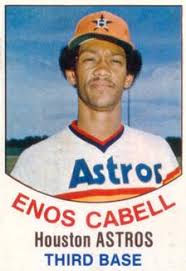
Notice this makes Crosswordese different from bad fill.  (Although there is significant overlap -- you could argue the former is a subset of the the latter.)  As an example, consider the three E-names ENOS, ESAU, an ESME.  According to the Wikipedia page, each of these is Crosswordese.  However, according to my definition, ENOS is clearly not because (almost) everybody has heard the name ENOS outside of crosswords.  If you're a baseball fan, you've likely heard of Hall of Famer Enos Slaughter (or Enos Cabell, if you're a baseball fanatic like me); if you watched The Dukes of Hazzard, you probably know Enos from that show (and you're probably bothered by the fact you loved a car with a Confederate flag painted on it); or you might know Enos from the bible or the space chimp.  The point is, the name ENOS is well-known outside of Crossworld.  The same cannot be said for ESAU or ESME -- a relatively minor character in the Bible and a titular name only big-time Salinger fans are likely to know.


Another type of Crosswordese are those entries with which solvers are familiar, but not in the form in which they appear in the grid.  For example, AANDE and ONEA are crossword puzzle staples, even though they are always written as A&E and 1-A "in the wild."  Other types of entries I put in this pile include variants nobody uses (AMEBA), plural abbreviations nobody uses in the plural form (STES), random partials (IN IS), random roman numerals you almost certainly would never see outside of crossword puzzles (MMCI), random affixes people never use by themselves (OON), and especially random plural affixes people never use by themselves (OSES).   These types of entries represent my least favorite form of Crosswordese because they feel like extra cheating to me.  I try to never use them in my puzzles.

A lot of foreign words and phrases are also Crosswordese, but certainly not all of them.  HERR and FRAU are legit entries, in my book, but not NIE or EIS.  There is only so much German your typical solver will know.  There are a good number of proper nouns that also qualify as Crosswordese, though, I would argue, not some of the most common crossword names like OTT, ONO, and ENYA (but definitely ERLE, EERO, and ESAI, among other ).

So, to give a final, recapping example: OREO not Crosswordese, OREM Crosswordese, OREL I'm not sure about.  Does the average solver remember "The Bulldog"?

Friday, September 29, 2017

Pippa


As I mention in my notes at XWordInfo and Word Play, I came up with the seed answers to this one, while watching football, so it's fitting -- in a very stretched way -- that football would be at the forefront of many people's minds this week.  I hate that it's so difficult to enjoy the NFL today.  I used to live for football Sunday.  As a grad student, I would get all my work done by Saturday night, go to the neighborhood sports bar around noon Sunday, order some breakfast and a Bloody Mary, and overstimulate myself with seven NFL games at once.  After I had my first kid, literally the first thing I did when I got home from the hospital was call DIRECTV so that I could get NFL Sunday Ticket.  But now everything is different.  There's CTE; there's Kaepernick being blackballed; there's the fact that I'm a 40-year-old man whose emotional state is somewhat dependent on how a group of kids I don't know perform in a weekly game; and then there's the overriding feeling that the NFL cares nothing about its fans and is just trying to squeeze every last nickle out us (because that's what it's doing) -- TV blackouts, tax-payer-funded stadiums, PSLs, $100 parking, endless commercial breaks, pop-up ads on every highlight video, etc.  At some point, enough is enough.  My compromise this year is that I'm still following football, but I'm not paying for it in anyway (other than consuming the ads of its sponsors, which I can't avoid without tuning out completely).  It's a tenuous deal.

[A good article by Eric Reid (above left).]

Anyway... about my puzzle.  I think this one came out pretty well.  The long answers are nice, and there is not a lot of glue -- at least I don't think there is a lot glue.  I've found what constitutes crossword glue is very subjective.  There have been many times in which my puzzles have been dinged by the critics for containing too much glue, and then I read their examples and protest to myself, "That's not glue!"  In this puzzle, the only two answers I really don't like are RELO, which sounds very made-up-y to me, and ACERB, which is in the dictionary, but for which I can find no references "in the wild," save one:

[From Shakespeare's "Othello"]

I also don't love PIPPA, surprisingly.  I still think she is Crossworthy, but when I conceived of this puzzle years ago she was in the news big-time.  She had just been maid-of-honor in her sister's big wedding, and I figured she was going to hang around like a Kardashian for years to come.  Now it seems like she's hardly in the news -- the American news, at least -- at all.


This puzzle seems to be relatively well-received.  Jeff Chen at XWordInfo didn't love the layout because it necessitates a lot of three-letter words.  That's a critique, I suspect, is shared by less 1% of the solving population.  As a constructor I fret about the word statistics of a puzzle (word count, distribution, cheater squares, etc.), as I solver I never notice them or care -- maybe subconsciously I do, but I dunno.  By the way, I noticed that in my notes I wrote "conservation" instead of "conversation."  I did it at Word Play too -- nobody caught it apparently.

Rex Parker said it was "fun," which is almost the equivalent of a five-star review.  He complained about the clue for MOT, which at first I thought was petty, but now I actually mostly agree with.  One thing crossword constructors and editors should try to do is make the language in puzzles match the language outside of puzzles as closely as possible.  Rex is right when he says nobody ever uses the term MOT interchangeably with "Zinger."  To experienced solvers, this is something we've learned to gloss over, but to newbies, I suspect, it could be a potential turn-off.  With that said, only experienced solvers can handle a Friday puzzle, so in this case, it's a moot discussion.

Amy Reynaldo, over at Crossword Fiend, said she was tired -- not of my puzzle, just in general.  Fair enough.  I blog every once in a while for like 50 people.  Doing what she does must be like a part-time job.

Some bullet points.

  • The clue for HOVERBOARDS is weird.  It makes it sound like people actually used hoverboards as transportation today, like they are recumbent bicycles or something.  In the clue I submitted, I referenced Back to the Future II, which I think is the only proper way to write a clue for it.  (Oh, apparently there are things called "hoverboards" that aren't really hoverboards.)
  • I put TELEKINESIS into this puzzle after watching this.
  • JOLLY RANCHER was the candy of my childhood, so I'm happy to be responsible for its puzzle debut.
  • I'm particularly proud of my clues for COS, TRES, and APU.
  • IN ANGER makes me think of this Oasis song.
  • Run-DMC and ADIDAS in the same puzzle is a nice touch, if you were an MTV watcher in the '80s.

Until next time...


Thursday, September 14, 2017

Crossworld Olio

The puzzle in today's NYT is mine.  It's fine.  I might or might not talk about it more than that.  I have a few other things I'd like to discuss, and my blogging time always goes by sooner than I think it will.


First, I wanted to follow up on my last post about my ambivalence toward constructor pay.  (In the comments section, Will Shortz actually chimes in with some thoughts, which was unexpected and kinda cool -- I appreciate he took the time to do that.)  I did submit a puzzle to the NYT after writing it.  My "constructor block" went away (kinda), and I got what I think is a decent idea, so I constructed it up and submitted it.  I'm reconciling the low pay (relative to what the puzzle brings in for the paper) by not buying a subscription to the online paper.  I still want to read it, so I'm just going to abuse the ten free articles they give you each month -- if you use Chrome and Internet Explorer and your tablet and your phone then that's forty free articles a month, which is more than enough for me.  Normal I wouldn't do that.  I very much believe in paying for the content I consume, if the provider is charging for it.  However, I make an exception when I feel I'm being taken advantage of in some way or things aren't totally "fair," in which case, I have no compunction about using a (legal or at least legalish) end-around the payment process, if one exists.*  So a "free" subscription to NYT seems more equitable to me.

Second, I wanted draw some attention to Evan Birnholz's ongoing critique (i.e., panning) of Timothy Parker's Universal crossword puzzle, published in the Philadelphia Inquirer and Boston Globe.  It's hilarious.  Although being that Evan apparently regularly solves the puzzle, I'm not sure who the joke is on.  If solvers complain about the quality of the NYT puzzle, they should take a look at Evan's Twitter feed.  (Although, being better than a daily puzzle from a guy so out of ideas that he literally plagiarized other crosswords is not exactly a high bar to clear.)


[You will have to find Evan on Twitter if you want to read the entire thread.  I couldn't figure out how to link to a tweet.]

My question: What exactly happened to Mr. Parker?  Am I remembering things incorrectly or were his puzzles once halfway decent?  I feel like his old USA Today puzzles, while always being a step below those of the NYT and the LAT, were at least palatable.  I actually cut my constructing teeth as a USA Today contributor.  The summer before I started grad school, back in the mid-twenty-aughts, I was living in the spare bedroom of my sister and brother in-law, and I didn't have much to do, so I would stay up until the wee hours of the morning constructing and listening to The O'Franken Factor on the now defunct Air America Radio.  It was $50 a pop at USA Today back then, and I probably sold them about 15 puzzles in the span of a few months.  Parker would get back to me about a submission within a day or two, and the answer was almost always "yes."  It was great.  Although, being that the answer for puzzles of similar quality at the NYT or the LAT was usually "no," perhaps I am in fact misremembering how good the USA Today puzzle was under Parker.

I went looking for some old USA Today newspapers with my puzzles in them -- I know I had some lying around at one point -- but I couldn't find any.  What I did find instead was a notebook full of "original versions."  (This must be very exciting for you, reader.  You get to see masterpieces in their rawest forms!  It's like when I went to Mozarthaus in Vienna, and they had a bunch of his compositions as he first wrote them with ink and parchment.)  Back in the day, I would frequently construct on graph paper because I didn't always have access to a computer at home, let alone crossword puzzle constructing software (hard to believe, today, and this wasn't that long ago).  Here are a few that I believe actually appeared in USA Today circa 2003.

[I used to number the margins to the right and below the grid in reverse order, so that I wouldn't screw up the symmetry -- pretty smart, huh?]

Pirate puns!  RATED ARRR!  BUCK AN EAR!  Actually, I had to revised this grid, because it contained BOOTY CALL, which was too racy (changed to BABY BOOTY).  I remember I sent this to Peter Gordon first, and in the submission, I explained what a booty call was.  He wrote back a polite "no thank you," but then at the end he wrote something like, "By the way, I know what a booty call is!"  In my defense, in the only picture I had ever seen of him, he was wearing a bow tie.  I thought he was some sort of fusty stuffed shirt who wouldn't know what a booty call is.  I guess I shouldn't stereotype.  Lesson learned: Don't ever wear a bow tie.


The long entries in this puzzle were given punny clues, so it was something like:
"Soldier Field team's lethargy?"
"Talismans belonging to actor Peter and family?"
"Spy work?"
Not too exciting.


This is my absolute favorite -- three coffee-related puns, all pretty weak (unlike how I prefer my coffee), with the revealer COFFEEHOUSE TALK.  Is that even a thing?  Coffeehousing is a thing in board games, in which you chatter idly to distract an opponent, but COFFEEHOUSE TALK?  I don't think that's an actual thing.  No matter.

Well, I'm out of time.  So I guess I'm not going to talk about my puzzle today.  That is, unless I have a chance to jump back on this afternoon.  Sometimes I have things to say after I read the reviews.

Until next time...

Oh, one last thing.  I'm on Twitter, and I currently have a pathetically small number of followers, because I almost never tweet, and I almost never tweet, because I have a pathetically small number of followers.  @DamonGulczynsk1 if you want to help me break the Catch-22.  I've decide to tweet about once a day, so even if I'm lame, I won't be clogging up your home page.

[Update: 10am Friday]
Okay a few last, last things.  I just wanted to give five quick thoughts on today's puzzle.
  1. As if you need further proof that crossword puzzle solving is an extremely subjective endeavor, note that Rex Parker, and Jeff Chen and Amy Reynaldo basically say opposite things about my puzzle.  Rex thinks there is "nothing wrong" with it but that it was "flat."  Jeff says that it has "a ton of great fill," but too much "glue."  Amy calls it "zippy" (my favorite description), but doesn't like seeing ENOLA in a puzzle (fair enough, I will try to retire that one).  You can't win with everybody.  I've learned the only person I need to please when it comes to constructing is the man in the mirror... and Will Shortz.
  2.  Speaking of pleasing myself -- ahem -- I love my clue for FRENEMY.  The first time I ever heard the term (from an episode of Sex and the City, I think), I immediately thought of Reggie and Archie.  They are the epitome of frenemies.
  3. I've never heard of this Saul Bellow novel Herzog.  My HERZOG power rankings: Werner, Whitey, and there is no third place.
  4. Sometimes I think I'm really smart, and then I read about people like John Von NEUMANN, and I think "well, I'm at least kinda smart."
  5. My apologies for the AHAS/LEV/AVEO section of the puzzle.  I know it's awful, but I painted myself into a corner and needed to sacrifice a few squares to save the rest of the puzzle.  It happens. 
*Speaking of which, if anybody has the NFL Sunday Ticket package and wants to give me their online credentials, so that I can logon and watch from my device, by all means, hit me up.  I don't buy it anymore, for a variety of reasons, but I still get a pretty bad yen to watch the Seahawks every Sunday.

Friday, August 4, 2017

Should NYT Constructors Demand More Money?

[This is the grid I submitted.  It's the same as the final version, save the first letter in the puzzle.  During edit this was changed to BIG A/BSS.  I think my entries are better, but I understand (I think) the logic behind the change.  RIGA/RSS could be a straight-up Natick at the R, whereas BIG A/BSS is inferable, even if less elegant.]

The puzzle in today's New York Times is a themeless one by me.  I like it fine -- standard Friday fare, I think.  Actually, I'm going to give myself more credit: I think it's a little better than the average Friday puzzle.  I don't have too much to say about it other than that, but I do want to talk about something else crossword puzzle related.

A few days ago, noted crossword puzzle blogger Rex Parker sent out an intriguing tweet calling for constructors to stop "submit[ting] xwords to the NYT until they pay fairly".


I was going to send a reply tweet with some thoughts, but I didn't, because over the years I've developed a strong aversion to responding to things on social media.  I found one of three things happens: (1) nobody cares or responds to my post; (2) somebody cares too much, and I end up in a "comments battle," in which nobody can express themselves fully, both sides just dig in deeper and deeper, and nothing gets accomplished, other than I waste a bunch of time to get stressed out and irritated over nothing; (3) I have a satisfying and informative exchange.  I will let you guess which of these three happens to me the least frequently, by far.  I do post comments on-line, but it's typically about uncontroversial topics in fora in which I already feel comfortable.  (Twitter is not one of these; I think I have three followers and have sent fewer than ten tweets total.)

But this is a topic I'm interested in, so I want to write about it.  The first question:

What is fair pay?
Currently the NYT pays constructors $300 for daily puzzles and $1,000 for Sunday puzzles.  After some number of puzzles (20, I think), you get a 20% increase, so I now get $360 for a daily and $1,200 for a Sunday (theoretically, I haven't submitted a Sunday-sized puzzle in years).  If you do the arithmetic, this means the NYT likely pays its constructors less than $175,000 total per year.

On first blush, this might not seem that low.  I would gladly write the New York Times puzzle everyday for that annual salary.  But, of course, the quality of the puzzle would suffer drastically, because I would very quickly run out of good ideas, and I would be time-pressed on the weak ideas I did have.  If I'm getting over half my puzzles rejected now, when I can cultivated them over days or even weeks, how would things look if I had to pump one out everyday?  I don't think any constructor could keep that pace (although Zhouqin Burnikel appears to be trying!).

That's the thing about the NYT puzzle.  It's the cream of the crop (as judged by Will Shortz, of course), culled from the oeuvres of many good constructors.  It's like having an inhuman super constructor on staff.  And what is fair pay for an inhuman super constructor?  Well, it depends, I suppose, on how much revenue they generate for the paper.  And on this topic we can only guess.  I don't know of any publicly available analysis speaking to this, and it's possible the paper doesn't even really know itself, as it's a very difficult thing to quantify.

But here's a number I'll throw out there: $8 million a year.  It comes from this guy, whose source is a BuzzFeed article, whose source is somebody "familiar with" the paper.  This only includes money from the digital crossword puzzle subscription, so it is very clearly an underestimate of the total amount the puzzle generates for the paper, as it excludes the puzzle's probably still rather substantial dead-tree value.  But I'd rather underestimate than overestimate, so let's go with $8 million.

There is no hard-and-fast rule dictating the percentage of a business' sales that should go to payroll, but from what I can gather reading online, it's usually between 15% and 30%.  So let's go 20%.  On $8 million, that's $1.6 million.  Let's say half of this goes to NYT crossword puzzle staff -- editors, testers, bloggers, etc. -- and half of it goes to the constructors.  (I have no idea what the real percentage is; I'm just trying to make reasonable, conservative guesses, here.)  That's $800,000 a year for constructors.  That's roughly five times more than we get now.

If I'm not wildly overestimating things (and I suspect, if anything, I'm way off in the other direction) then the New York Times could easily afford to pay constructors around $1,800 for a daily puzzle and $4,500 for a Sunday puzzle.  That's a significant bump.

So then what gives, why don't they pay more?
The obvious answer: They don't have to.

I suspect that this is due, in large part, to inertia.  This is the pay model that was in place decades ago, so it's the pay model that's in place now.  I don't think businesses alter their operations to increase costs unless they are absolutely forced to.  And the NYT puzzle seems to be selling fine.  From their perspective -- why change?

After all, even if you think there are better puzzles out there now (say, Fireball or various indies), the NYT has the reputation and they have Will Shortz, who's not just a crossword celebrity, but an actual celebrity.  These two reasons are enough for people to buy the puzzle (for now, anyway).  In the short to medium term, the solvers are mostly expendable.  The "puzzle master" Will Shortz is the star, and the paper is clearly staking a claim on his reputation.  You can see this in the print version of the puzzle: Will's name appears larger and in a more prominent location than the constructor's.


And, by the way, this isn't a criticism of Will, with whom I've only had positive (if limited) correspondences.  He earned his reputation through decades of good work.  Throughout his tenure, he's significantly transformed the NYT puzzle in a positive way and deserves a lot of credit for that.  Also, I think I heard that he's the main reason why the constructor has a byline at all (previously we were anonymous).  And he claims to be an advocate for higher constructor pay.  To what extent and what that means exactly -- I have no idea.

Now, if all the top constructors heeded Rex Parker's call and stopped submitting to the NYT, then I do think the quality of the puzzle would degrade enough that solvers would eventually catch on and get their puzzle fix elsewhere.  (Rex would tell you -- or rather, he does tell you, everyday on his blog -- that the quality erosion is already in full effect and has been for years.  I'm not nearly as down on the NYT puzzle as he is, but, if I'm being honest, I don't think he's totally wrong.)

But a "constructors' strike" is not something that's likely to happen.  For one thing, there is a collective action problem.  For another thing, there is no "constructors' union".  Somebody would have to organize all this from scratch, and I don't see anybody agitating to step up and do so.  And even if somebody did, I don't know if a critical mass of constructors would go along with it.  I suspect a decent percentage of us: (a) don't think we're underpaid (they take the libertarian view -- our work is worth only what we can sell it for on the open market); (b) don't care; (c) do care, but are still willing to submit.

I definitely fall (fell?) into camp (c).  In the same Twitter thread mentioned above, Rex attributes this general perspective to ego and the thrill of seeing one's name in the paper.  He's not totally wrong, but I think he's overly cynical.  It is exciting to see your byline appear above something in the New York Times.  But the thrill wears off pretty quickly.  What it's more about for me is distribution infrastructure.  When you do something you think is cool, you want to share it with as many people as possible.  It's not ego; it's a different compulsion.  And the New York Times is still the best for this.  They have the biggest audience.  I once tried to get my own indie site going, and it sucked and I hated it.  I'd much rather send my puzzles somewhere and be done with them.

There's also the fact that constructors love constructing and do it as a hobby for fun all the time.  If you have a hobby, and you can make a couple grand a year on it, it feels a lot like "found" money.  It's hard to get riled up about worker exploitation, when you are periodically getting $360 checks, for spending your free time the way you want to spend it.  I'm well aware that I can only do this because I don't depend on crossword puzzles as part of my income and that this mindset is precisely what allows places like the New York Times to underpay everybody.  But on the other hand, it doesn't feel right to tell somebody they shouldn't sell their work for whatever they are willing to sell it for.

So what do you do about it?
Well, I'm probably not submitting to the New York Times for a while, but that's more because I have "constructor's block" than anything else.  To make matters worse, after a tremendous streak of acceptances, I've had my last few puzzles rejected, and it's perpetuated something of a crossword funk.  I don't feel like I have any good ideas, and when I do get one, it completely falls apart when I attempt to translate it to the grid.  Right now, it feels like I'm done submitting to the NYT, because it feels like I'm done submitting everywhere.  But that's probably not the case.  I'll probably come out this, and when I do, I'm not exactly sure how I will proceed.

Well, I think I've spilled enough ink on this topic for now.  Please comment if you have any criticisms or thoughts on this analysis.  Until next time...

Friday, June 30, 2017

Friday's Puzzle and an Indie 500 Recap

Friday's Puzzle
A puzzle of mine is running in the New York Times today.  It's one I made a while ago, which is unsurprising, since the queue for NYT themeless puzzles is l-l-l-long.  I've actually stopped submitting themeless puzzles for the time being, in part because the field is so crowded.  The NYT themeless supply apparently far outweighs its demand, so it's getting harder to get themeless puzzles accepted and the wait until they run is just as long as always.  Also, I'm currently going through a bit of a "blah" period with respect to puzzle making in general.  My crossword-constructing battery is low, and I have other projects I want to work on in my (very limited) spare time, so I will probably take a little respite from constructing.  However, I still have a bunch of puzzles in the NYT pipeline (both submitted and already accepted), and these breaks never last too long, so my fans, of which I can only assume I have myriad, should hardly even notice my absence.

Anyway, I don't have much to say about today's puzzle,* so instead I will give a recap of my favorite annual crossword puzzle tournament -- and also the only one I've ever attended -- The Indie 500.

*One thing I will say: I wish the clue for FRANZ FERDINAND wasn't so straightforward.  The clue I submitted was something like "Royal Prince who famously died in an automobile along with his wife in 1914."  Now that has some teeth to it.


Indie 500 Recap
This is my third year at the tournament (it's also the tournament's third year at the tournament), and each year I seem to arrive on the latish end of the *time* spectrum despite living just a few miles from the tournament's location -- or maybe it's because of this.  Many solvers come in from out of town, so this is the only reason they are in D.C. to begin with.  But I go through my usual morning routine (clothing and feeding two small children) before the tournament starts, and my usual morning routine involves me rushing out the door like a madman.

There's only scattered seating available in the tournament ballroom when I arrive, so I grab two available seats in the corner.  I'm supposed to meet a friend there, but he no-shows -- even worse, he doesn't text me to say he can't make it, so I'm there holding his seat like a schmo while the last few entrants are looking for a place to sit.  When people ask if the seat is taken, I have to do that apologetic, shoulder-shruggy "yeah, sorry."  Man, I hate that.  (After the tournament ended, he texted to say something came up and his phone battery was dead all day.  That sounds pretty excuse-y to me, but I'll give him the benefit of the doubt, lest something serious happened, and I'm the asshole for even broaching the subject.  Also, he never expressly asked me to save him a seat, so it's kinda on me anyway.)

I had two goals going into this competition: (1) Finish all the puzzles in the allotted time without error; (2) Don't finish in the top 25% of the field.  The latter is so that I will still qualify for the "Outside Track" (the JV Division) next year.  The former is my own goal since the actual goal of the tournament -- winning -- is not achievable given my current skill level.  I keep telling myself that one of these years I'm going to give competitive solving a serious go and train and try to be a force in my division, but I never do, and I doubt I ever will.  The truth is I don't love doing crossword puzzles.  I very much like doing crossword puzzles, but I'm not fanatical about it the way the top solvers are.  (I've always been way more into constructing than solving.)  I usually "only" do one a day, often in the background while I'm at work, which isn't nearly sufficient to get me near the top of even the lower division.  So I set my own little goals and enjoy the puzzles and the company.

Speaking of the puzzles...

Puzzle 1: "Before and After" by Angela Olson Halsted


A straight-over-the-plate, easy-breezy, Monday-level puzzle to kick things off.  The theme answers consisted of two words, one of which can precede the word TIME (the tournament theme, if you didn't already know) and one of which can follow the word TIME, paired together in zany ways.  So one theme answer was HAMMMER BANDITS (Hammer Time/Time Bandits), and the clue was "Construction site thieves?"  Then everything was tied together using Cyndi Lauper's timeless hit "___ After ___".

I thought this puzzle was pretty good.  It was enjoyable and didn't have any big flaws, but I'm not crazy about the randomness of the TIME phrases.  There are countless combinations one can come up with (Gratis use of the flute on Super Mario Bros. 3?: FREE WARP), so the ones that are chosen really have to hit the mark -- be very funny or clever -- or tie together in some other way.  The ones in this puzzle are fine; they're cute, but none of them stuck with me after I finished.

And I finished quickly, for me -- 5:03 with no errors.  This was actually near the top of the Outside Track.  I always thought I was more of a long-distance solver than a sprinter, but it seems to be the exact opposite.  What I really need to do is work on my endurance, as the bigger puzzles gave me much more trouble than this one.

Puzzle 2: "Jam Session" by Paolo Pasco


A nice offering by constructing wunderkind Paolo Pasco.  (He apparently couldn't be at the tournament because he had to take his SATs; I don't think this was a joke.)  This one had four CRUNCH TIME theme answers with a unit of time "crunched" two-letters per box.  The clues were also written under a faux time crunch, so they got sloppier and sloppier as the puzzle went on (e.g., "Suffres s form" for HAS).  I liked that added dimension, but I heard several other solvers grumbling about it between rounds.  I could see how, in the context of solving under an actual time crunch, one might find it annoying, but I thought it was fun.

I picked up on the the theme fairly quickly, but spent a lot of time trying to parse out some of the proper nouns.  It wasn't the spate of millennial pop culture that got me, as one familiar with Mr. Pasco's work might think (although I had never heard of this ANSEL Elgort guy), but rather it was some old stuff -- an Ottoman leader named ALI PASHA and a Tom Wolfe story from 1976 called "THE ME DECADE".  I had to Google both of them after I finished to make sure they were correct.  They were, so I was two-for-two with clean grids.

Puzzle 3: "This Mashup's for the Byrds" by Tracy Bennett


Every year there is a puzzle that I do not understand at all while I'm solving it and barely understand after I'm finished and looking back over it carefully.  This year it was Puzzle 3.  The basic idea, which I didn't fully appreciate while solving, is that the theme clues are lyrics from the Byrds song "Turn, Turn, Turn" with one letter added and then the answer is something cute that fits that new lyric.  So the first one is "A time to gather stoners together":  BURNING MAN.  The actual lyric from the song is "A time to gather stones together", but, man, you have to really know the song well to pick up on something that subtle.  And why Burning Man?  It's just an answer that fits?  And then the extra letters apparently spell out RENT, and one of the long down answers is a song from the play Rent.  What the what?  There must be a connection here that I'm missing?  Was Rent written by David Crosby or something?  I totally don't get it.  (On the plus side: cool looking grid.)

In addition to being, in my opinion, too obtuse a concept, the execution seemed off in a few places.  For example, one of the clues was "A time you many embrace", which I cannot read in a manner that makes grammatical sense.  I was able, however, to piece together the answer, GROUP HUG.  In fact, I was able to piece together all the answers.  My times aren't great, but I'm perfectly accurate at the lunch break.

Puzzle 4: "Non-Linear Narratives" by Erik Agard ft. Allegra Kuney


This puzzle was weird -- really weird.  It was also my favorite one of the bunch.  I don't think I can succinctly describe the theme, but it involved writing in animals in the wrong direction, and it had three revealers -- one for a pair of theme answers in the grid, one for another pair of theme answers in the grid, and one for all four of them.  While I was solving it, it seemed like madness, and I honestly wasn't too keen on it, but after finishing I really appreciated it.  It's like when you see a movie and you're not sure if you like it or not, but it sticks with you for the rest of the day, so you conclude that it must have been pretty good -- that's how this puzzle was for me.

It was also, time-wise, probably my worst puzzle of the bunch.  I got stuck in a corner and was getting so irritated, I contemplated filling in half-random guesses just to be done with it, but I'm glad I didn't.  Again, I was not in contention for any sort of real prize, so there was no reason to not stick it out until the bitter end.  And as it turns out I didn't need until the bitter end anyway.  After about ten minutes of staring at the empty boxes and rereading the same clues a hundred times, something clicked (as it often does), and I finished the puzzle without error.  One more to go!

Puzzle 5: "In Search of Lost Time" by Neville Fogarty


A perfectly cromulent add-some-letters/subtract-some-letters puzzle to close out the day.  Other than Puzzle 1, this one was the most straightforward of the set, and coming on the heels of Erik's and Allegra's avant-garde behemoth, it was very welcome for this solver (I'm pointing to myself).  The theme involved adding and subtracting the letters ERA from common phrases to create new zany phrases, e.g., "Secure movie rights for a haboob?" was OPTION DESERT STORM and "Smudge on a Scantron form?" was ERASURE THING.  (I originally read the latter clue as "Smudge on a Scranton form," so I thought it had something to do with The Office.)

This, of course, is a very common crossword conceit, but that's not necessarily a bad thing.  A puzzle with a well-worn theme can still be really fun, if it's really well done, and this one was really well done.  Transforming SHOCK TREATMENT into SHOE RACK TREATMENT was especially clever.

And best of all (for me) I solved it without an error.  Yay!  I did it.  Five-for-five!  No mistakes!

I finished 20th of 89 in the Outside Track, and I finished 56th of 128 in the combine field -- a little better than average, which is where I think I fit in in life in general.  Pretty much everybody at the tournament is a really good crossword puzzle solver compared to the general public, and for the things I'm really good at, when I'm tossed in with a group of people who are also really good at them, I feel I'm usually somewhere between the 55th and 60th percentile.  At grad school, I definitely wasn't the best student, but I think I was solidly above average.  In high school wrestling, I would get soundly beaten by state champion contenders, but I was varsity for three years and had a winning record overall.  When I used to play competitive Scrabble, I was usually near the top of the middle division.  Always the same place.

Maybe that's a good new nickname for me "The 57th Percentile".  It doesn't sound too impressive, but one must keep in mind that it's among people who are already quite good at doing the things they are doing.  With that qualifier in mind, it's not too shabby at all.

Anyway, getting back to the tournament, I actually solved the final puzzle faster than any of the finalists in the Outside Track.  Almost certainly this is in very large part because I didn't have the stress of solving in front of everybody on a big board.  Also, I chanced into the trick pretty early on -- I randomly started solving at the bottom first, which I don't do normally (and probably wouldn't have done had I actually been in the finals) -- which allowed me to use the Across clues pretty early on in the process -- a huge boon, obviously.  Congrats to Eric Cockayne, the Outside Track winner, and to Katie Hammil, the Inside Track winner.

I split pretty quickly after the finals (I wanted to take advantage of my kid-free day and stop by a friend's birthday party), so I missed the annual pie-in-the-face tradition -- each year a solver, selected randomly, gets to throw a pie in the face of a constructor of his or her choosing.  I heard Erik Agard was the pie-ee this year.  It's just as well I missed it, as it makes me feel uncomfortable, to be honest.  I don't get what's enjoyable about watching somebody get hit with a pie in a completely contrived setting.  It seems like a big mess for not much payoff.  It also seems kinda mean to me (even though I know the recipient is very much in on the joke).  But others seem to like it, and it's all in fun, so whatever -- no harm, no foul.

Well, that was my experience at The Indie 500 2017.  It was great.  My final grade for the entire opERAtion: A.  I hope to see you there next year.  Until then...